
Stasjonen EG1912T markerer Titanics radiotelegrafi
I perioden 10.-15. april 2026 blir spesialstasjonen EG1912T aktiv fra Spania som en internasjonal minneaktivitet knyttet til RMS Titanic og radiotelegrafien om bord. Kallesignalet er valgt for å speile historien: 1912 er året skipet sank, og T står for Titanic.
Aktiviteten arrangeres av Unión de Radioaficionados de Vigo-Val Miñor (URE), og har særlig fokus på telegrafistene Jack Phillips og Harold Bride på Titanic, samt Harold Cottam på RMS Carpathia, som mottok nødmeldingene og satte kurs mot havaristen.
Titanic forlot Southampton 10. april 1912 og kolliderte med et isfjell 14. april, før skipet sank tidlig 15. april. I samtiden var radiostasjonen om bord blant de mest avanserte maritime installasjonene, og de siste meldingene fra kallesignalet MGY er blitt stående som et historisk eksempel på hvilken rolle radio kan spille i redningsarbeid til sjøs.
Også norske skjebner er knyttet til forliset. Kildene oppgir at 31 norske statsborgere var registrert som passasjerer på Titanic. Av disse overlevde 10, mens 21 omkom.
Regler og tidsrom for EG1912T
Aktiviteten pågår fra 00:00 UTC 10. april 2026 til 23:59 UTC 15. april 2026. Dette tilsvarer 02:00 norsk tid 10. april til 01:59 norsk tid 16. april (CEST). Det kjøres på HF, VHF, UHF og SHF, og alle modes er tillatt, med særskilt vekt på CW.
Alle som får kontakt med EG1912T mottar QSL-bekreftelse via bureau, samt elektronisk bekreftelse via eQSL og LoTW. For CW-kontakter sendes et eget QSL-kort til ære for telegrafistene.
For mer informasjon, se arrangørens side på QRZ.com.
Nedenfor følger en artikkel fra Union de Radioaficionados Españoles (URE), som har sett nærmere på telegrafistenes historie ombord på Titanic og hendelsene i radiorommene på Titanic og Carpathia.
The Wireless History of the Titanic
Written by Carlos Reboreda, EA1PJ
The Shack
The Titanic’s radio room, also known as the Marconi Room, consisted of three rooms and was located within the officers’ cabin section.
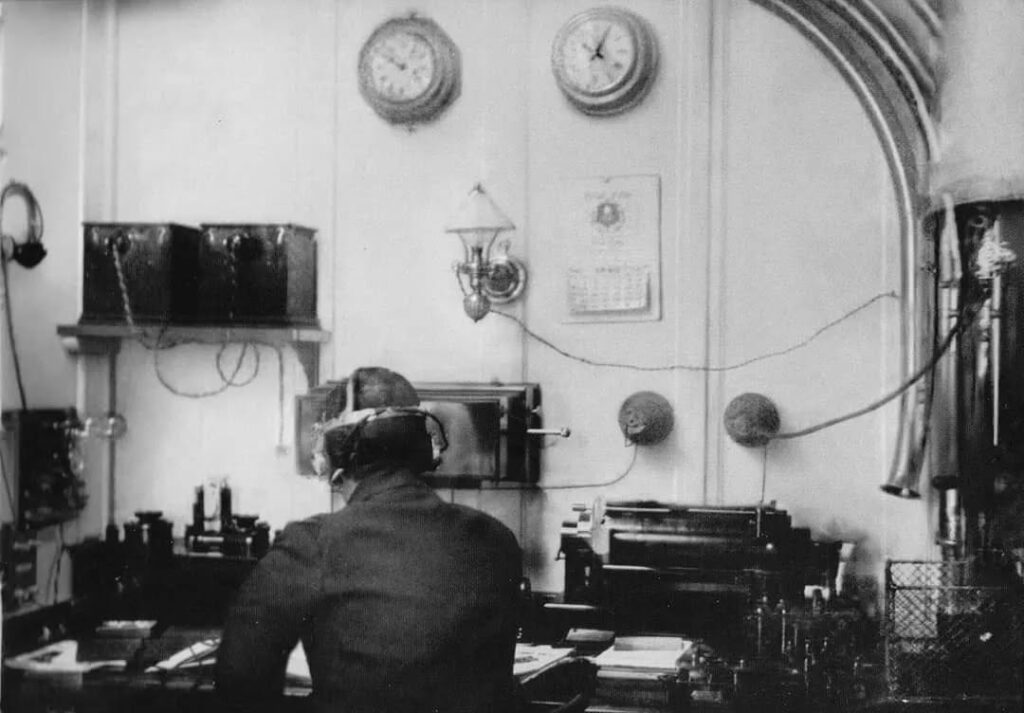
The layout of the radio suite: The Marconi Room
The Marconi Room was the height of luxury and technological advancement at the time. It was the envy of any radio enthusiast. However, amateur radio was in its infancy and unregulated in 1912. Professional telegraph operators tended to look down on the ‘radio amateurs’ of that era. They accused them of causing interference, even deliberately, and of being poor telegraph operators.
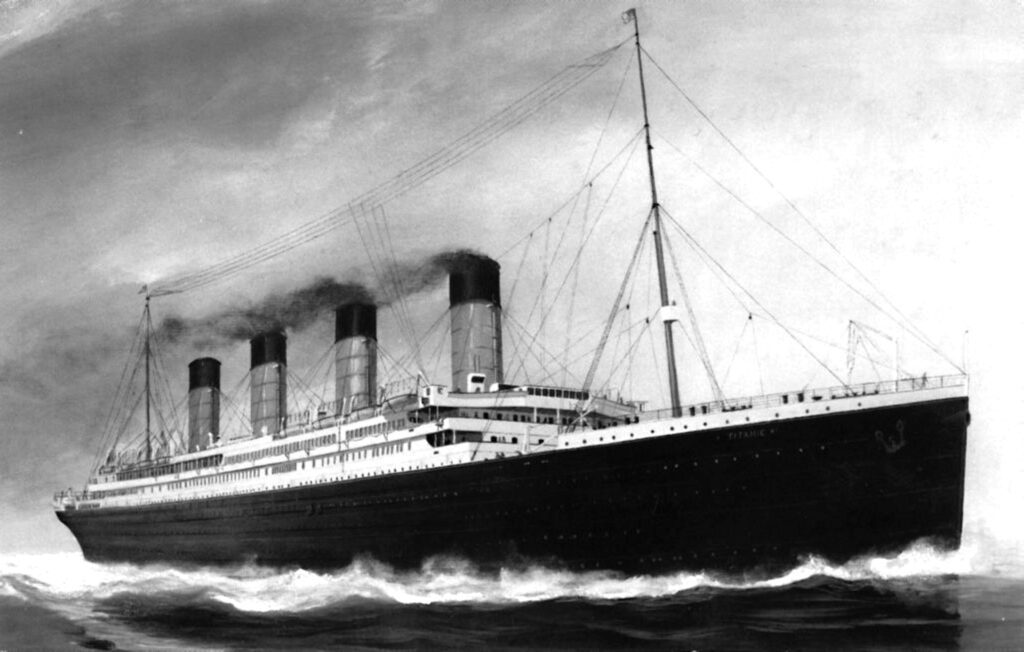
In any case, the early devices and antennas used by the precursors of amateur radio were nothing like the Titanic’s magnificent 5 kW spark transmitter. Marconi ‘T’ antennas ran from the bow to the stern of the ship to carry the transmitter signal as strongly and far as possible. This type of antenna is still in use today. DL8LAS has one of the strongest 160 metre signals using one of these ‘Marconi T’ antennas.
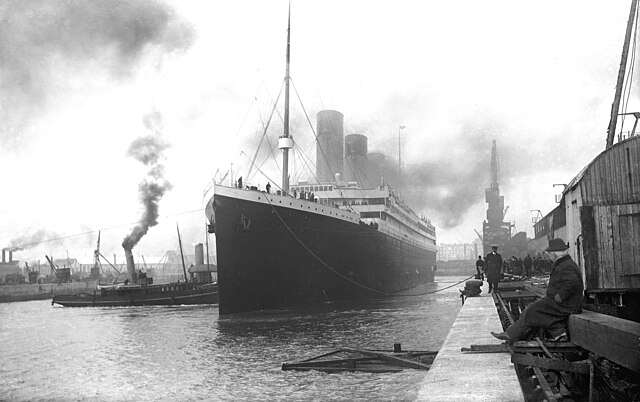
At the frequencies used by the Titanic at that time — between 500 and 1,000 kHz (or between 300 and 600 metres) — communications could reach 800 kilometres during the day and just over 3,000 kilometres at night. Such capabilities were beyond the imagination of amateur radio operators of that era.
As well as housing the transmitter and receiver sections, the Marconi room contained the most important element for Marconi: a tube through which large numbers of telegrams sent by passengers to their friends on land were delivered. This will prove to be a key issue in the history of the shipwreck, as we shall see later.
In addition to the telegraph keys, the radio room had several synchronised clocks, as the Titanic crossed different time zones during its voyage.
Finally, there was a spare battery-powered transmitter in case the ship’s main power failed.
Radio Suite Layout: The Silent Room
One of the many new features of these facilities was the construction of a soundproof room. This room was built to isolate the noise generated by the 5 kW rotary spark transmitter and the transformers powering the equipment.
Radio Suite Layout: The Operators’ Cabin
After working endless days and sending hundreds of ‘Marconigrams’ (telegrams sent from Marconi transmitters), the operators were given a small cabin next to the radio room. It was equipped with bunk beds, a wardrobe and a sink so that they could rest near their workstations.
First Radio Contacts
The Titanic was built in Belfast, Northern Ireland, and set sail from there on 2 April 1912 to conduct radio station tests. According to José Davila Dorta (EA8EX, deceased; his son Ruca now holds the call sign), local low-power contacts were made that same afternoon to begin adjusting the antenna, transmitters and receivers, as detailed in an article in the EA4DO historical archive. The sea trials were so successful that the captain decided to continue to Southampton without returning to port.
The next day, once the adjustments were complete, a full-power test was carried out: ‘V V V CQ DE MGY.’
The Tenerife Radiotelegraph Station answered this first call. The distance reached was 2,000 nautical miles (approximately 3,700 kilometres). This makes Tenerife part of the Titanic’s wireless history.
Contact was also made with the Port Said radio station in Egypt, which was 3,000 nautical miles (about 5,500 kilometres) away. This confirmed to the telegraph operators that the Titanic’s radio station was ready for the voyage. The Titanic set sail for New York on 10 April 1912.
MGY
The Titanic’s radio station was initially given the official call sign ‘MCU’, but a few days later it was discovered that this had already been assigned to the US ship ‘Yale’, so the call sign was changed to ‘MGY’. The «M» indicated that the radio was built by Marconi (if it had been built by Telefunken, it would have been a «T»). The second letter identified the ship’s country: in this case, ‘G’ stood for Great Britain. The ‘Y’ identified the Titanic.
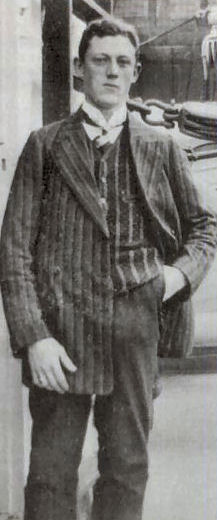
Now, let’s talk about three telegraph operators from the early 20^(th) century: John George ‘Jack’ Phillips, the officer in charge of the Marconi room; Harold Sydney Bride, his second operator; and Harold Thomas Cottam, the telegraph operator on the RMS Carpathia, the first ship to come to the Titanic’s aid. This is the story of the final «dots» and «dashes» transmitted by MGY: the RMS Titanic.
The first warnings
The first warnings were received on 12 April 1912, the second day of sailing. The Titanic received at least twelve alerts about icebergs in the Atlantic from other ships in the area. These messages were forwarded to the bridge and the course was changed to avoid the cold areas before heading towards New York. The captain ordered that the lookout posts be reinforced.
The radio broke down
That same night, on the 12th, the radio station experienced a problem. A breakdown rendered it unusable. Ignoring Marconi’s instructions, Phillips and Bride tried to locate the fault, but it would be many hours before they found it.
Full speed ahead!
The Titanic maintained its speed of 22 knots as the lookouts scanned the clear night sky and calm seas. Were these conditions conducive to the detection of an iceberg?
Definitely not, especially without binoculars. The calm sea made it difficult to see the icebergs because there were no waves hitting them and no characteristic foam was produced, which would have allowed the lookouts to suspect the presence of a floating mass of ice.
But why couldn’t they use binoculars? Because the person responsible for them had been replaced and had not boarded. Incomprehensibly, he did not report where he kept the binoculars or hand over the key.
The radio is working again!
It’s 13:40 UTC on 14 April. The fault has finally appeared. It was a very long repair, but in Phillips’ and Bride’s defence, they were not radio technicians. Although they had some knowledge, they were just telegraphy operators. Marconi specifically employed specialised technicians who were the only ones authorised to perform repairs on its radio stations.
For many hours, Titanic’s radio was unable to transmit or receive. Up to that point, over 250 telegrams had been transmitted and another 200 were piled up on their desk waiting to be sent. These messages were mostly inconsequential, but they were a good source of income for Guglielmo Marconi’s company.
However, this was not the worst consequence of the breakdown. During those hours without radio communication, the Titanic stopped receiving numerous messages from various ships warning of large quantities of ice in the area.
Once the radio was working again, two more ships — the RMS Mesaba and the SS Californian — warned the Titanic about how close they were to large masses of ice. For unknown reasons, however, these messages were never acted upon.
MGY: We have stopped the engines; we are surrounded by ice!
The SS Californian, which was barely 20 miles away, warned us that there were large masses of floating ice in the area. The Californian’s telegraphist, acting on his captain’s orders, insists on reporting the seriousness of the situation. Jack Phillips confirms receipt of the message, but asks the Californian telegraph operator not to bother him again so he can continue with his passenger telegrams.
At 23:30 UTC on 14 April 1912, Cyril Evans, the Californian’s radio operator, who was tired after a long shift, certain that the Titanic had already been informed of the danger, and seeing that the Titanic was only concerned with transmitting messages to passengers, turned off the radio and went to sleep.
Iceberg in sight!
23:40, 14 April 1912. A lookout alerts the crew to an iceberg ahead. Captain Smith was resting in his cabin and had been replaced on the bridge by First Officer William McMaster Murdoch. Murdoch ordered a desperate turn to port (left) in an attempt to avoid the iceberg to starboard (right), but it was too late; the Titanic was sailing at 22.5 knots (almost 42 kilometres per hour). The Titanic collides with the iceberg.
The Collision
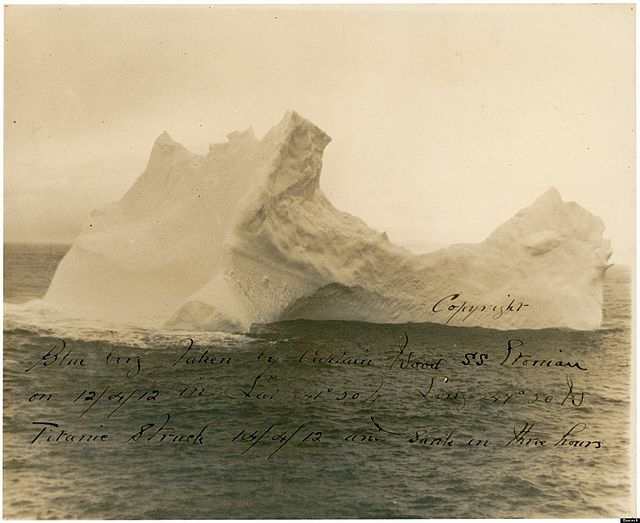
Some researchers are now questioning the widely accepted theory that the iceberg caused large cracks in the starboard side of the ocean liner. Instead, they propose that the Titanic dragged its underside along a submerged part of the iceberg, creating numerous small holes through which water could seep into the hull. This theory is supported by new 3D models and was discussed in the National Geographic documentary Titanic: The Digital Resurrection. Dr Robert Ballard, the discoverer of the Titanic, referenced this theory long before his death, revealing his conviction that the ship’s hull had serious structural problems and that the quality of the construction materials was poor.
Other conspiracy theories suggest that the sunken ship was not the Titanic, but the Olympic, as part of an alleged strategy to collect the Olympic insurance payout.
An even more extreme theory suggests that J.P. Morgan planned to kill the millionaires John Jacob Astor and Benjamin Guggenheim and Isidor Straus, co-owner of Macy’s. This was allegedly because they were blocking the creation of the North American central bank, known today as the Federal Reserve of the United States, which was established a year later. However, we will not delve into those depths.
After the collision, the Titanic’s captain returns to the bridge and requests a damage report. He then went to the Marconi room, gave Jack Phillips an update on the situation, and alerted him to the possibility of having to transmit a distress call.
35 minutes lost
For 35 minutes, life aboard the transatlantic does not change much. In fact, in the radio room, Jack Phillips is overwhelmed by the number of unsent messages and continues to transmit the usual telegrams to Cape Race.
It is 00:15 UTC on 15 April 1912. Jack Phillips wearily transmits one more telegram:
«TITANIC TO CAPE RACE: GEORGE SIMUND. NEW YORK. DELICIOUS TIME. IT FEELS GOOD TO ME. I HOPE EVERYONE IS WELL.»
«We’re sinking!»
Captain Smith bursts into the radio room and orders the ‘CQD’ signal (Marconi’s maritime distress call) to be transmitted. The message sent is drastically changed:
CQD DE MGY (the Titanic’s call sign).
This is repeated up to six times. Position: 41.44 N, 50.24 W. (This position is corrected to 41.46 N, 50.24 W a few minutes later, and then to 41.46 N, 50.14 W, probably due to the ship’s drift.)
The first responses to the ‘CQD’
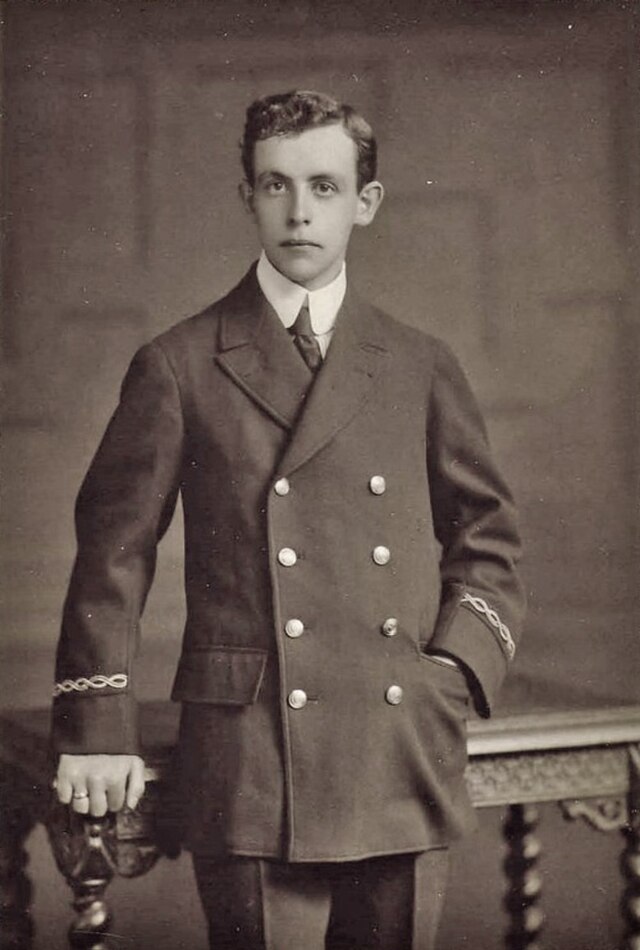
The first ship to answer the distress call was the RMS Frankfurt, which was a slow ship and far from the area. Phillips continued transmitting ‘CQD’ until shortly afterwards, when he received a reply from Harold Cottam, a telegraphist on the RMS Carpathia. The Carpathia was the first ship to arrive at the wreck site four hours later.
At 00:45, Harold Bride suggested to his boss that they transmit “SOS”, the new maritime distress call that had begun to replace Marconi’s “CQD” since 1908.
‘SOS’, of German origin, is faster to transmit and more recognisable than ‘CQD’, especially in poor reception conditions. Contrary to popular belief, this is the only reason why these three letters were chosen. They do not mean “Save Our Souls” or “Save Our Ship”, and they had been in use for several years prior to this. The RMS Slavonia was the first ship to broadcast an SOS in 1909. The sound is very recognisable, even to people who do not know Morse code.
What on earth happened to the Californian?
Subsequent judicial investigations conducted after the sinking of the Titanic, established that the SS Californian was 11 miles from the site where the liner collided with the iceberg. The crew of the Californian saw the white flares launched from the Titanic at 00:55 UTC.
Captain Stanley Phillip Lord, who was sleeping in his cabin, was informed and asked how to proceed. He responded that these were identification signals from the shipping company, not distress signals. At trial, Captain Lord claimed that he did not remember this conversation, possibly because he had been asleep.
The commanding officer, Herbert Stone, ordered an attempt to communicate with the ‘ship in sight’ using a Morse lamp, but the Titanic did not respond.
Why is this nonsense?
The reason why Stone did not wake the radio operator on the Californian remains unclear to the justice system. The sailors on duty observed that the neighbouring ship was getting smaller and smaller, so they concluded that it was moving away under its own power. In fact, what they were witnessing was probably the sinking of the Titanic.
The justice system considered these events to be an act of serious negligence. Captain Lord was dismissed by the Leyland Line shipping company, and Second Officer Stone accepted responsibility for being on watch on the bridge.
«Phillips, Bride, abandon the Titanic now!»
At 02:10, given the imminent sinking of the Titanic, Captain Smith relieved the two radio operators of their duties. However, Jack Phillips insisted on continuing to transmit as many distress calls as possible until the radio stopped working. They did not have to wait long; seven minutes later, at 02:17 UTC, the generator room flooded and the Titanic went into permanent ‘radio silence’.
Every man for himself
With no chance of retrieving the transmitter, Jack Phillips and Harold Bride quickly left the Marconi room. When they came out on deck, they were met with a devastating panorama: the bow of the Titanic was already submerged in the water, to the extent that the stern, high above the sea, displayed the ocean liner’s gigantic propellers. Music could be heard emanating from somewhere near the third chimney. It mingled with the terrified screams of people running from side to side, looking for a boat to save them from certain death.
The Lifeboat
Bride hears someone yelling at him. He recognises the voice immediately — it is that of the Titanic’s Second Officer, Charles Lightoller, who is asking for help to lower a collapsible lifeboat into the water. Together with other crew members, he deploys the ship. At that moment, at 02:18 UTC, the hull of the Titanic splits in two. One of the davits supporting the boat broke, causing it to turn over and land face down on the Titanic’s deck.
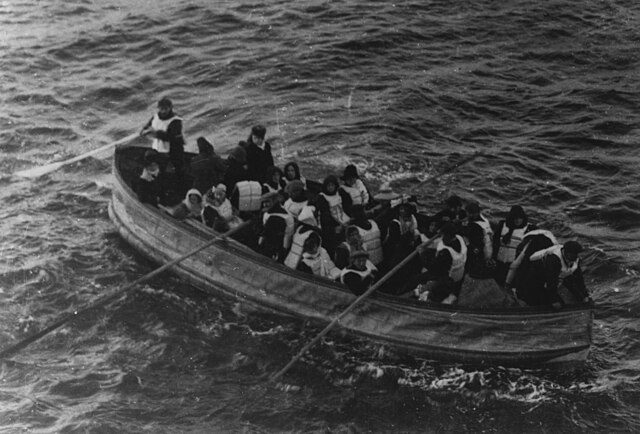
According to various sources, Jack Phillips ran to the stern of the Titanic at that moment, looking for an alternative to the seemingly useless boat. That was the last time Bride saw Jack.
The Two Miracles
Harold Bride was trapped under the lifeboat that had just fallen onto the deck. The second telegraph operator on the Titanic seemed destined to die, but fate can be capricious and, on this occasion, it played in his favour. When the hull split in two, water flooded that part of the ocean liner’s deck. The boat floated upside down and slowly moved away from the Titanic due to the waves caused by the collapsed chimneys on the sea’s surface.
Still under the lifeboat, Bride saved his life thanks to the air bubble that remained trapped underneath it. Up to fifteen people then climbed onto the boat, including Bride, who was suffering from clear signs of hypothermia and frostbite.
Charles Lightoller, who had unsuccessfully helped to prepare another lifeboat, jumped into the water at the last moment and ended up in the same boat as Bride. Together, they witnessed the Titanic disappear into the cold waters of Newfoundland at 02:20 UTC after breaking its hull in two with hundreds of people on board. Charles Herbert Lightoller, the RMS Titanic’s second officer, was the last survivor to be rescued by the Carpathia.
The wrong place to be
The stern of the Titanic sank last. During the sinking, some of the engineers who designed the Titanic did not tell passengers the whole truth. They told them not to worry because the ship was divided into independent, unsinkable compartments, which made the stern seem like a safe place. It was not.
Even if this theory were correct in principle, the hull fracture was not clean, and part of the bow was pulling the stern towards the seabed. Inevitably, the stern sank, killing hundreds of people by drowning or from the trauma of falling from the stern into the water.
The Legend
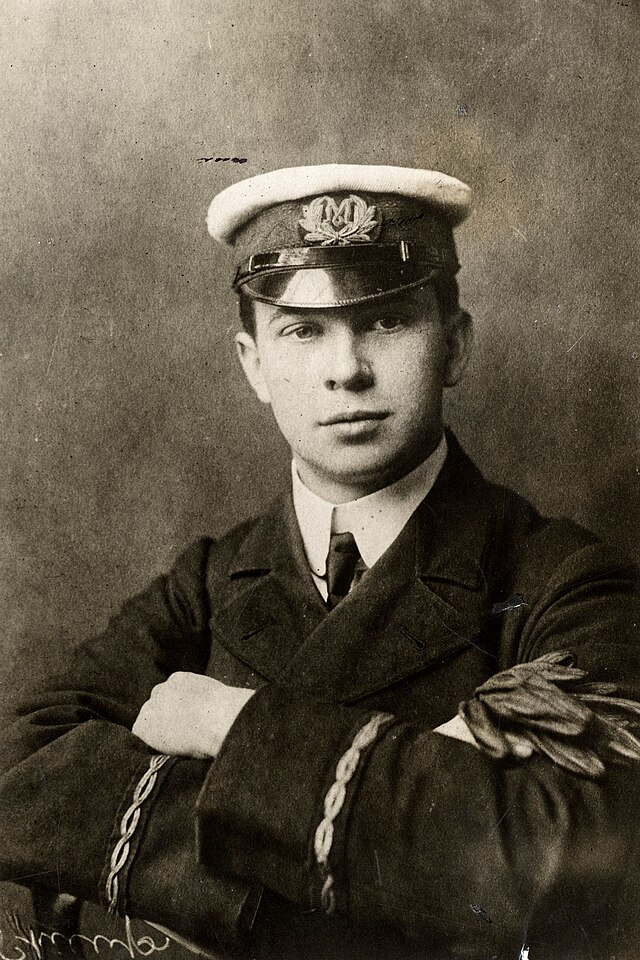
At 02:20 on 14 April 1912, Jack Phillips, a telegraphist, became a legend.
Nothing was ever heard from him again and his body was neither rescued nor identified. Jack was not as lucky as his subordinate. Ironically, the person who had managed to get a multitude of ships to respond to his requests for help, including the RMS Carpathia — the first to arrive at the shipwreck site — was unable to help himself or the hundreds of others who had sunk with the Titanic two hours earlier.
Jack Phillips remained at his radio position above and beyond the call of duty. He wanted to send every last ‘dit’ and ‘dah’ that the Titanic allowed him to transmit, regardless of his own safety.
Working alongside Bride, he defied Marconi’s orders and repaired the Titanic’s radio without fear of repercussions for insubordination.
The other hero
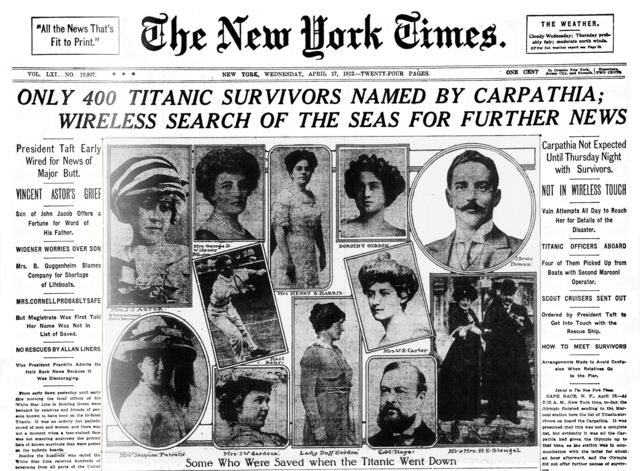
Harold Bride was later transferred to the Carpathia. Affected both physically and emotionally by what he had experienced, he helped the ship’s telegraphist to send messages to the families of those who had survived the most memorable maritime disaster in history.
Mysteries at 3,800 metres of depth
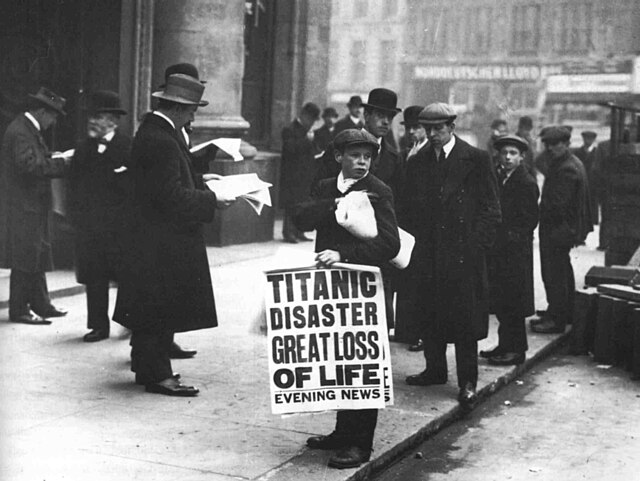
Why the iceberg warnings supposedly sent by Jack Phillips to the bridge were not taken into account and why the SS Californian did not come to the aid of the Titanic, despite having it in sight, are mysteries that sank with the ocean liner and the 1,496 people who could not be saved on 14 April 1912 at 02:20 UTC. However, seven hundred and twelve people were saved thanks to the courageous efforts of the sailors and three telegraphists, whose nerves remained steady until the final «dit» and «dah».
Manifesto for Telegraphy
This memorial honours three telegraph operators: Jack Phillips and Harold Bride from the Titanic, and Harold Cottam from the Carpathia. It reminds administrations, amateur radio associations and operators around the world that Morse code and CW are fundamental to the heritage of amateur radio and society as a whole. It is our duty to safeguard this heritage and pass it on to future generations.
While we should respect all modes of transmission, we must not abandon the first. If administrations do not require training for telegraph operators, associations and individuals must challenge that decision and promote interest in telegraphy in order to train future CW operators.
You may believe that telegraphy deserves to be recognised as intangible cultural heritage. Various bodies have promoted this proposal since 2011, including the International Amateur Radio Union Region 1 (Europe, Africa, and the Middle East). In 2014, associations such as the Deutscher Amateur Radio Club (DARC) succeeded in having Morse code included in Germany’s National Register of Intangible Cultural Heritage. This was a necessary preliminary step for UNESCO candidacy.
The VERON (Vereniging voor Experimenteel Radio Onderzoek) is also working towards this goal in the Netherlands.
Several communities in Belgium have joined this petition and achieved national recognition.
In Spain, members of the Spanish Radio Amateurs (URE) are strongly supporting efforts to raise awareness among governments of the historical importance of Morse code. The Radio Club Lliria, for example, carries out outreach work to raise awareness of the importance of Morse code as shared heritage.
The memorial to Jack Phillips, Harold Bride and Harold Cottam, the three telegraphists from the Titanic and the Carpathia respectively, serves to honour their memory. It reminds us — the administrations, radio amateur associations and radio amateurs worldwide — that Morse code and CW must be safeguarded as fundamental radio amateur heritage. We must strive to pass this heritage on to future generations.
We should respect all modes of transmission, but we must not neglect the first of them. If administrations do not mandate the training of telegraph operators, then associations and individuals must stand against that decision. We must strive to generate interest in telegraphy and train future CW operators.
The Titanic Memorial Organisation wholeheartedly supports this initiative. Our aim is to raise awareness among the Spanish amateur radio community, the URE and all relevant institutions, so that this initiative can be debated in Spain, as it already has been in other countries.
As telegraph operators, we do not want to be like the orchestra on the Titanic. This cannot be our last song before we disappear.
There is still a collective memory of telegraphy. Do not let this happen to our history. Telegraphy deserves to be recognised as part of humanity’s heritage.